
What is the OSI model?
The OSI model is a standardized conceptual framework that describes how different layers of a networking system should interact with one another. It was developed by the International Organization for Standardization (ISO) in the 1970s to provide a common way of understanding and designing network architectures.
The Seven Layers of the OSI Model
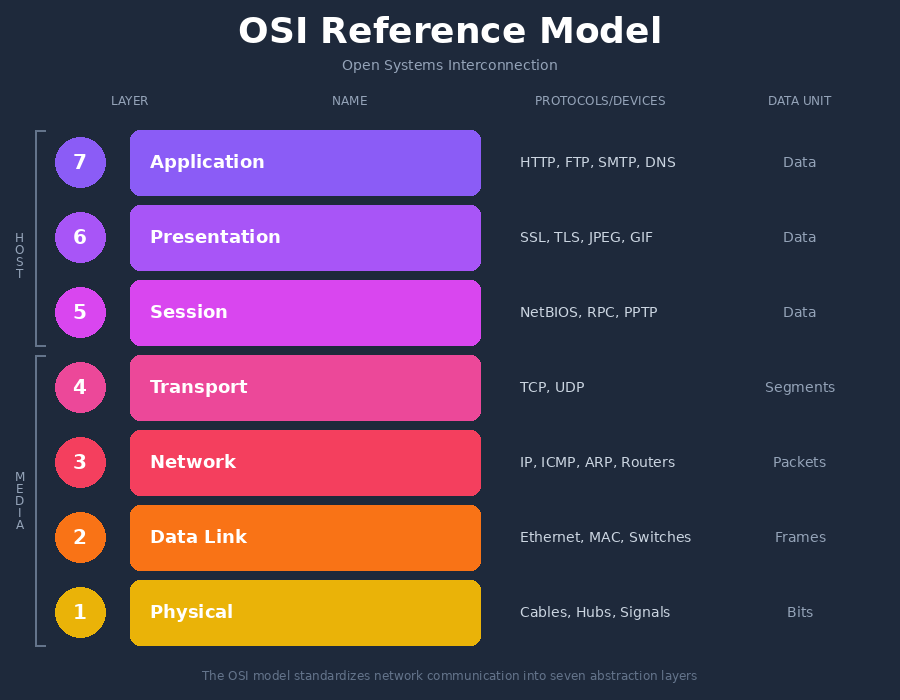
The OSI model consists of seven distinct layers, each with its own specific functions and responsibilities:
- Physical Layer: This layer deals with the physical equipment involved in the network, such as cables, connectors, and signal transmission. It defines the electrical, mechanical, functional, and procedural specifications for activating, maintaining, and deactivating the physical link between communicating devices.
- Data Link Layer: The data link layer is responsible for reliable data transfer between directly connected devices, detecting and possibly correcting errors that may occur in the Physical layer. It organizes bits into frames and handles media access control (MAC) addressing to ensure data reaches the intended recipient.
- Network Layer: The network layer is responsible for logical addressing and routing data between different networks. It determines the path that data should take to reach its destination, handling functions such as logical addressing (e.g., IP addresses), network topology, and traffic control.
- Transport Layer: The transport layer ensures reliable, end-to-end data delivery between applications. It provides features like segmentation, flow control, and error correction to ensure data integrity and proper sequencing.
- Session Layer: The session layer establishes, maintains, and synchronizes communication sessions between applications. It handles tasks such as checkpointing, restart, and recovery of data transfers.
- Presentation Layer: The presentation layer is responsible for translating, formatting, and encrypting data to ensure that it is presented in a way that the receiving application can understand. It handles tasks like data compression, encryption, and character encoding.
- Application Layer: The application layer is the closest to the user and provides network services directly to the application. It defines protocols and interfaces for specific software applications, such as email, file transfer, and web browsing.
Why the OSI Model Matters
The OSI model serves as a valuable framework for understanding and designing network architectures. By dividing network functions into distinct, interrelated layers, the OSI model:
- Provides a common language and understanding of network concepts, which facilitates communication and collaboration among network professionals.
- Allows for modularity and flexibility in network design, as changes or upgrades can be made to specific layers without affecting the entire system.
- Promotes interoperability between network devices and software by defining clear interfaces and protocols for each layer.
- Enables a structured approach to troubleshooting and problem-solving, as issues can be isolated and addressed at the appropriate layer.
Real-World Applications of the OSI Model
The OSI model is widely used in the design and implementation of modern network systems, providing a foundation for understanding and working with various networking technologies and protocols. Some common applications of the OSI model include:
- Network Protocol Design: Network protocols, such as TCP/IP, are often designed and developed with the OSI model in mind, ensuring that the protocol stack aligns with the defined layers and their respective responsibilities.
- Network Troubleshooting: When troubleshooting network issues, the OSI model can be used as a systematic approach to isolate and identify the source of the problem, focusing on the specific layer(s) where the issue may be occurring.
- Network Security: The OSI model can be used to understand and implement security measures at different layers of the network, such as physical access controls, data link-layer encryption, and application-level authentication.
- Network Education and Training: The OSI model serves as a fundamental framework for teaching and learning about network concepts, protocols, and architectures, helping students and professionals develop a comprehensive understanding of how networks function.
Considerations and Best Practices
While the OSI model provides a valuable conceptual framework, it's important to note that in practice, many network protocols and implementations may not strictly adhere to the seven-layer model. Some key considerations and best practices when working with the OSI model include:
- Flexibility and Adaptation: The OSI model should be viewed as a guideline, not a rigid set of rules. Real-world network designs and protocols may combine or bypass certain layers to optimize performance and functionality.
- Overlap and Interaction: While the OSI model defines distinct layers, in practice, there can be some overlap and interdependence between layers, as they often work together to enable end-to-end communication.
- TCP/IP and Other Protocols: The TCP/IP protocol suite, which underpins the majority of modern internet communication, does not directly map to the OSI model, but can be loosely aligned with its layers.
- Continuous Learning: As network technologies continue to evolve, it's essential for network professionals to stay up-to-date with the latest developments and how they relate to the OSI model, ensuring they can effectively design, implement, and troubleshoot complex network systems.
The OSI model provides a valuable conceptual framework for understanding and working with network architectures, but it should be viewed as a guideline rather than a rigid set of rules. Successful network professionals must be able to adapt the model to the realities of modern network technologies and protocols.